
First Night in a New City: Where Do You Even Eat? A Dining Plan
- Oisin Oregan
- 11 minutes ago
- 10 min read

Arriving in a new city can hit you with jet lag, confusing streets, and a sudden need for food. Honestly, the best bet is sticking close to your place, picking a spot that looks busy with locals, and just keeping that first meal simple. No need to chase perfection on night one.

People who overthink their first dinner often wind up exhausted or lost. Sometimes, they just give up and grab overpriced airport snacks—never a highlight.
The challenge goes way beyond just picking a restaurant. You have to get there safely, which can feel like a quest after a long journey when you’re running on fumes.
Ordering food gets tricky if you don’t speak the language. And then there’s the whole currency thing, which always seems to add a layer of confusion.
Dietary requirements? Those can be tough to communicate in a new place, especially when you’re tired and hungry.
From choosing the right neighbourhood to handling payments and getting back to your hotel, a few practical steps can turn that first meal into a way better experience. Food and drink really do set the tone for the trip, and honestly, it’s the easiest way to start connecting with a new destination.
Check out www.awolapp.com for more tips and ideas.
Choose the Easiest Area for Your First Meal

After you arrive, eating somewhere close just makes sense. Save your energy and skip the stress of wandering far when you’re tired and hungry.
Eat Near Your Hotel or Arrival Point
The area around your hotel, hostel, or guesthouse is usually the easiest choice for your first meal. You don’t have to figure out buses or new streets when you’re running on empty.
Lots of train stations have restaurants nearby. If your place offers a shuttle from the station, chat with the driver about good food spots—they usually know what’s open.
Staying at a working farm or family-run guesthouse? They often serve dinner or can point you to something close by. Hostel staff almost always know which places stay open late and welcome tired travelers.
Eating close to where you’re staying means you can get back to your room fast if you need to. Plus, you’ll start to get a feel for the neighborhood right away.
Use a Reliable Map Before Heading Out
A decent map stops you from wandering in circles looking for food. Download maps to your phone before you leave, and make sure they work offline—just in case.
Google Maps shows restaurants, opening hours, and reviews. If you’ve downloaded the area, you can even search “restaurant” offline and see what’s nearby.
In places with unfamiliar alphabets, a bilingual map is a lifesaver. You can match street signs and ask for directions without too much stress.
Google Earth lets you preview the neighborhood before you even get there. You can spot clusters of restaurants and check if the walk looks safe after dark.
Match Your Choice to Your Arrival Time
When you arrive makes a big difference. Late-night arrivals mean fewer options, while afternoons give you more freedom to explore.
If you show up after midnight, stick to 24-hour spots or anything within five minutes of your hotel. Most cities have a few convenience stores or late-night cafés near the main transport hubs.
Arriving in the afternoon or early evening? You can wander a bit farther—maybe 10 or 15 minutes—to a recommended spot and still get back before it’s too late. That’s the sweet spot for trying local food without rushing.
Morning arrivals are a different game since many restaurants won’t open until lunch. Look for breakfast cafés or bakeries—they’re open early and don’t demand a big time commitment.
Find a Good Place to Eat Without Overthinking It
Your first meal doesn’t have to be a highlight reel. If you stop stressing about making the “perfect” choice, you’ll actually get to enjoy the local food scene a lot faster.
Start With Busy Local Restaurants
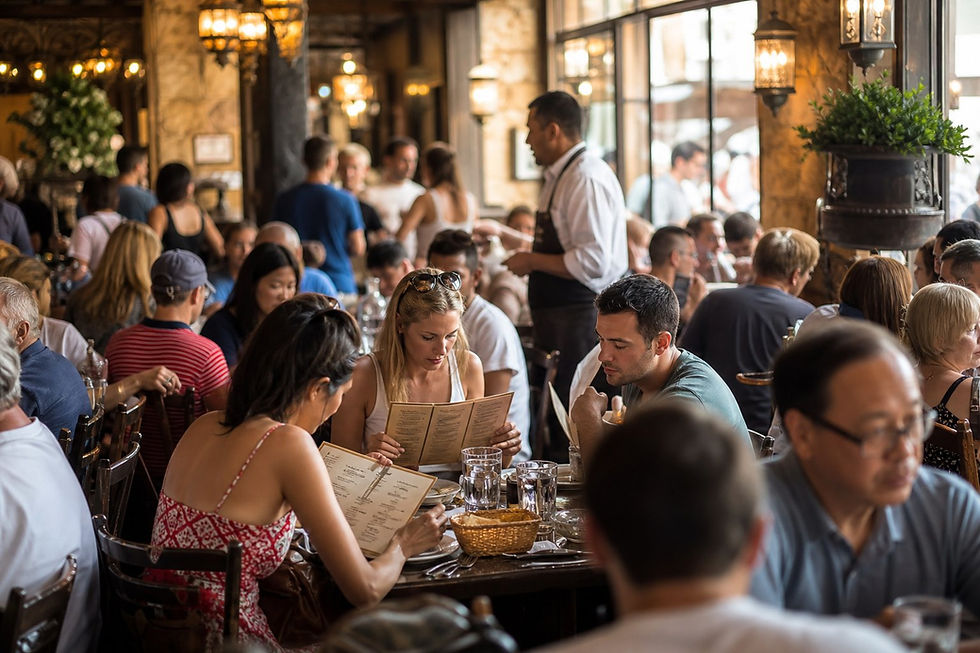
Busy restaurants at meal times usually mean locals keep coming back. Walk through lively neighborhoods around 1 PM or 7 PM and look for places with full tables.
If you see an empty restaurant next to a packed one, that’s probably a red flag—or at least a hint to keep walking. Tourist traps love empty dining rooms.
The line outside tells you a lot. If locals are willing to wait, the food’s probably worth a shot. I always peek inside to see what people are actually eating before I commit.
Google Maps ratings can help, but honestly, nothing beats a quick look at the crowd. A place with 4.2 stars and a packed house usually beats a 4.5-star spot with just two diners. Some cities even have tools for finding where locals eat instead of just tourist favorites.
Busy local spots usually price their menus for residents, not tourists. That means you get real food at fair prices—not the “visitor tax.”
Choose Between Street Food and Sit-Down Dining
Street food gives you a crash course in local flavors. Vendors who’ve stood in the same spot for years have earned a following for a reason. Look for stalls with constant turnover—fresh ingredients, popular dishes, and almost always a line.
If you’re craving a longer break or want to try a few dishes, sit-down places are better. Traditional restaurants can showcase regional cooking that you might not get from a street cart. Save the fancy stuff or tasting menus for later in your trip, once you know what you actually like.
Lowering your expectations a bit makes the choice easier and gets you eating sooner. Street food is perfect for quick meals; restaurants work when you want to relax or have a conversation.
Look for Cafés, Bakeries and Coffee Shops
Cafés and bakeries stay open at odd hours, so they’re a solid fallback. Local bakeries serve what people grew up eating—pastries, snacks, and sometimes even simple sandwiches.
Coffee shops often have light meals, not just drinks. They’re great for breakfast or a quick afternoon bite when you don’t want a full meal. Neighborhood cafés can give you a glimpse of daily life too, which is always a bonus.
Bakeries put their goods on display, so you can just point at what looks good. No need to decipher a menu in another language. Fresh bread, local pastries, and sandwiches rarely disappoint, and you usually pay less than at a restaurant.
Get There Safely and Return With Confidence
Getting to a restaurant in a new city is its own adventure. You have to think about how you’ll get there and back, especially if it’s dark or you’re in an unfamiliar neighborhood.
Compare Walking, Taxis and Public Transport
Walking is great if the place is within 20 minutes of your hotel. You’ll get a feel for the area and maybe notice a few landmarks for later. Plus, you don’t have to worry about transport schedules or surprise fares.
But sometimes, what looks close on Google Maps isn’t so simple—think steep hills or sketchy, unlit streets. If you can, check the route during the day first.
Public transport often costs less than taxis, but it can take longer and might not run late. You’ll want to double-check if the metro or bus goes late enough for your return trip.
Taxis take you door-to-door and skip the navigation headache. Just make sure you know rough prices so you don’t get overcharged. Airports and hotels usually post standard taxi rates to popular spots.
Use Ride-Hailing Carefully at Night
Uber and similar apps give you upfront pricing and let you track your driver, which feels safer—especially if you’re alone. The fare shows up before you book, and you get a record of your ride.
But not every city has these services. Some places restrict ride-hailing or don’t have reliable internet for booking. Download offline maps and keep your hotel’s business card with the address in the local language—just in case.
Women traveling solo might need to think about cultural norms with taxis or ride-shares at night. Sometimes, the subway has security staff or hotels offer shuttles—worth checking out for peace of mind.
Plan the Route Back Before Ordering
Restaurants sometimes close before public transport stops, but the timing really varies. Always check the last bus or train before you settle in for dinner.
Some places are in busy areas with lots of taxis, but others require you to call ahead. Staff can usually help with a taxi or recommend a reliable company. Save your hotel’s address in both English and the local script so drivers know where to take you.
Always have a backup plan. That could mean knowing a secondary bus route, keeping emergency taxi cash separate, or finding a well-lit café nearby where you can wait safely if your main plan falls through.
Handle Money, Language and Dietary Needs
Getting food on night one means dealing with money, language, and making smart choices when you’re running on empty.
Carry Cash and Small Denominations
Bring enough cash for at least two days when you land. Four times your nightly hotel cost is a decent estimate.
Public transport and small restaurants often can’t break big bills. Break large notes at the airport exchange, and ask for small change so you can pay for things like bottled water or street snacks.
Card payments don’t always work, especially in developing countries or at smaller eateries. Some places only take cash, and others tack on fees for card transactions. ATMs might not be close to your hotel or the restaurant district, so cash access can get tricky after dark.
Keep emergency money separate from your main wallet. If you lose your cash or something gets stolen, you’ll be glad for the backup stash while you figure things out.
Order Clearly When You Do Not Share a Language
Learning six essential phrases really does make ordering food a lot easier: "hello", "please", "thank you", "sorry", "yes", and "no". These basics show respect for local culture and help start off on the right foot with restaurant staff.
Pointing to menu items can save the day when words fail. Many places put up photos of their dishes, which is honestly a lifesaver if you can't speak the language at all.
Translation apps can help decode mysterious menus, but it's smarter to grab offline versions before your trip. Sometimes the Wi-Fi situation is just... not ideal.
Numbers matter for ordering. If you can say how many you want in the local language, you’ll avoid confusion. When in doubt, just hold up your fingers—visuals never hurt.
Carrying a bilingual map comes in handy when you’re asking locals for restaurant recommendations. Locals can point out streets or landmarks near good eats, and that’s sometimes better than any app.
For more travel tips and food advice, check out www.awolapp.com.
Make Sensible Choices When You Are Tired
Jet lag and exhaustion make complicated dining choices feel like a chore. Sometimes it’s just easier to grab a simple meal from a familiar chain or the hotel restaurant instead of puzzling over a new cuisine when you’re wiped out.
Avoiding alcohol on the first night really does help fight jet lag. Focus on hydration and stick to lighter, easy-to-digest meals—heavy or super exotic food can mess with a tired stomach.
If you’ve got health, religious, or ethical restrictions, do a little research before you arrive. Packing a backup meal isn’t a bad idea, especially if you land late and everything’s closed.
Supermarkets near your hotel usually offer quick grab-and-go options. It’s worth checking their hours ahead of time—some close early or shut down entirely on certain days for religious or cultural reasons.
Make the Meal Your First Local Experience
The first night isn’t about hunting for Michelin stars or planning some epic food crawl. Honestly, just pick one simple local dish, ask someone nearby for a tip, and save the ambitious eating for another day.
Try One Regional Dish or Drink
Picking a single regional specialty keeps that first meal both manageable and memorable. If you land in Bangkok, you might head for pad thai at a busy street food stall. Touching down in Cape Town? Maybe try bobotie at a neighborhood café.
In Mexico City, tacos al pastor are a classic first stop. In Lima, it’s usually ceviche. The best move is to choose something that feels tied to the place—sushi in Tokyo, for example, just makes sense.
Leave the fancy tasting menus for later. Restaurants that focus on one or two dishes often do them best, in my experience.
Watch how locals eat. Some dishes come with specific condiments or need a certain technique. Observing first can save you from confusion and shows a bit of respect for the local way of doing things.
Ask Locals for Their Neighbourhood Favourites
Hotel staff, taxi drivers, and shop owners know where to find good, real food. These folks eat nearby every day and can point you to spots that never make it into the guidebooks.
The way you ask matters. Try, "Where do you eat after work?" instead of the generic "Where’s a good restaurant?" You’ll usually get better, more honest answers. Asking about places within walking distance keeps things simple when you’re tired or new in town.
Asking locals works way better if you’ve learned a few basic phrases in their language. A simple greeting and a "please" go a long way—people tend to open up and give more detailed tips. In cities like Madrid, Barcelona, or Beijing, this approach often leads you to family-run places that most tourists miss.
Sometimes locals will mention spots near markets, parks, or where walking tours kick off. These areas usually have clusters of affordable, quick places where residents grab a bite between errands or meetings.
Save Bigger Food Plans for Another Day
That first night isn't the time to book a tasting menu or hunt down a restaurant across town. Jet lag, unfamiliar streets, and travel fatigue can make ambitious dining plans more stressful than enjoyable—trust me, I've learned that the hard way.
Complex food experiences—cooking classes, food tours, or visits to famous culinary spots—really demand energy and attention. Museums and festivals? Those can wait, too.
The first evening should just feel easy. Most travelers benefit from staying close to their accommodation.
Grab a simple meal nearby. It lets you settle in, adjust to the time zone, and figure out your surroundings without extra hassle.
London's got amazing Indian food in Brick Lane, but exploring that right after arrival just adds pressure you don't need. Medellín's bandeja paisa tastes just as good at a local spot around the corner as it does at a destination restaurant.
Keeping that first meal low-key leaves room for spontaneity. If the initial choice doesn't hit the spot, you've still got time and energy to try somewhere else without derailing the whole evening.
For more travel tips and stress-free planning, check out www.awolapp.com.


Comments