
'Hidden Gem' Restaurant Is Now Meaningless: Check the Tip

Walk into any city centre now and half the restaurants on the high street claim the same thing: they're a hidden gem. The phrase shows up on menus, Google listings and a thousand identical TikTok captions pointing at the same bowl of pasta.

'Hidden gem' has become a marketing label rather than a useful description, which means the recommendation behind it deserves more scrutiny than the phrase itself. A restaurant calling itself undiscovered while sitting at the top of a search page or a concierge desk's go-to list isn't hiding from anyone. The more useful question for a hotel guest is not whether a place sounds secret, but why it's being suggested in the first place, and whether money changes hands before the suggestion reaches them.
This matters most at the point where a traveller actually makes a decision: standing at a concierge desk, or scrolling a list of recommended restaurants and tours. Working out what sits behind that tip takes a few minutes and a handful of plain questions.
Why Has 'Hidden Gem' Lost Its Meaning?
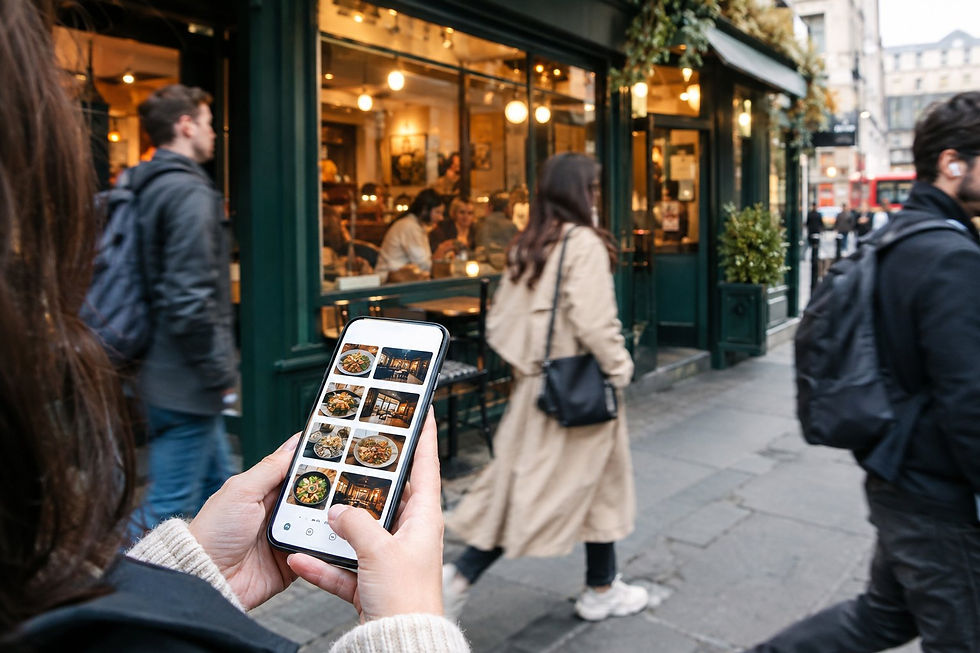
'Hidden gem' has stopped describing anything specific because it gets attached to restaurants with decades of press coverage as often as it does to a genuinely obscure noodle bar. A Michelin-starred dining room and a corner café with three regulars can both wear the label, which makes it close to meaningless as a signal of quality, as one Hong Kong food columnist argued when describing how the phrase gets stretched over restaurants that are anything but hidden, in a piece questioning whether hidden gem restaurants exist at all. The same pattern plays out across travel writing more broadly, with one commentary calling it the most overused phrase of the year in coverage from The Straits Times.
Once a place gets tagged a hidden gem online, the label tends to outlive its accuracy. A restaurant can earn the tag, go viral, fill up every weekend for a year, and still carry the same wording on its profile.
What Makes a Restaurant Worth Discovering?
A restaurant worth seeking out usually shows it through consistency rather than branding. A kitchen that's been full of regulars for years, with a menu that hasn't been rebuilt around what photographs well, tends to hold up better than one marketed as secret.
Real estate plays a quiet role here too. A restaurant tucked down a side street often pays lower rent than one on a main parade, which can mean the money goes into ingredients and staff instead of signage and footfall.
Does an Out-of-the-Way Address Mean Better Value?
An out-of-the-way address doesn't guarantee better value on its own. Rent is only one cost among many, and a hard-to-find restaurant can still run with thin margins, high prices, or inconsistent food.
Location tells a guest very little about what's on the plate. Checking a recent menu and a handful of detailed reviews gives a far clearer picture than the address alone, something covered in this breakdown of how restaurants buy their way up search rankings.
Could a Concierge Recommendation Earn a Referral Fee?
Yes, a referral fee can sit behind a concierge recommendation, and this happens often enough to be considered normal practice rather than a scandal. A restaurant, tour company or spa can agree to pay a hotel a flat fee or a percentage of what a guest spends, in exchange for being the name that gets mentioned first, according to a breakdown of how hotel concierge recommendation commissions work.
Payments to the Hotel or Concierge Business
Payments at business level work like any commercial partnership. A hotel strikes a deal with a supplier, and the fee or commission belongs to the property, independent of which concierge happens to be on duty that day, as laid out in that same guide to how concierge recommendations are often paid for. One traveller found a tour booked through a hotel cost roughly three times the price of booking it directly once the hotel's cut was built in.
Hotel concierges have also been known to earn commissions of up to 15% on certain bookings, such as limousine hire, according to a Wall Street Journal report cited in an industry piece on concierge trustworthiness.
Personal Payments to Employees
A personal incentive can sit alongside a business deal, where an individual concierge earns extra for steering guests toward a particular supplier. This layer is separate from a tip, which in the UK is a voluntary thank-you for service and is protected by law: under the Employment (Allocation of Tips) Act 2023, employers must pass on 100% of qualifying tips and keep a written tipping policy, a rule that has applied since 1 October 2024 across England, Scotland and Wales.
Why a Referral Does Not Automatically Mean a Bad Recommendation
A commission doesn't make a restaurant worse. Hotels generally prefer to formalise partnerships with suppliers they already trust, since a bad experience reflects poorly on the hotel too, and a supplier usually has to keep performing to keep its preferred status.
How Might an Incentive Shape the Options You Hear About?
An incentive narrows the list of what gets mentioned, even when the recommended place is genuinely good. If a concierge earns more for steering guests to one tour operator, that operator gets named first, whether or not it's the best fit for the guest's plans.
The Restaurants, Tours and Drivers Left off the List
A commercial arrangement can quietly crowd out alternatives. A nearby restaurant with no referral deal, or a smaller tour operator without a hotel partnership, may never come up in conversation, not because it's worse, but because nobody profits from mentioning it.
Price, Availability and Suitability
Price can creep up to cover the commission a supplier pays out, so a tour booked through a hotel desk sometimes costs more than the same tour booked directly. Availability and suitability matter just as much: a recommendation built around a partnership doesn't always account for a guest's budget, dietary needs or timings, which is why asking for two or three options across different price points tends to surface a better match.
What Can You Ask Without Making It Awkward?
A direct, specific question gets a better answer than a vague one, and concierge staff are rarely offended by it. "Does the hotel have a partnership with this restaurant?" tends to land better than "is this any good?"
Ask Why This Option Fits Your Plans
Asking why a particular restaurant or tour suits the guest's own plans, rather than asking if it's recommended in general, pushes the conversation toward specifics. A concierge with real local knowledge can usually explain the reasoning quickly, covering things like cuisine, distance or timing.
Ask About Partnerships and Other Choices
Asking plainly whether a referral fee or commission applies, and following up with "what would you suggest if there were no partnership at all?", tends to produce a second option on the spot. A concierge who can only offer one answer for a given cuisine or activity is worth double-checking against an independent search.
How Can You Check the Tip Before Booking?
Checking a recommendation takes a few minutes and covers three areas: the food or activity itself, physical safety, and how payment is handled. None of these checks require distrusting the concierge, just confirming the basics independently.
Compare Menus, Prices and Recent Reviews
Looking up a restaurant's current menu and a handful of recent, detailed reviews before booking through the hotel can reveal a lot. Star ratings alone can be misleading, since fake and manipulated reviews turn up on major platforms, a problem examined in this guide to spotting fake Google reviews and in this look at whether online restaurant reviews are fake. A high ranking on a travel site doesn't always mean genuine quality either, as explored in this analysis of why a Tripadvisor number one listing is often a tourist trap.
Check Tour and Transport Safety
Safety and security deserve a direct question before any tour or transfer gets booked, particularly for activities involving drivers, boats or remote locations. Asking who operates the vehicle, whether it's licensed, and what happens in the event of a cancellation protects both money and personal safety.
Confirm Booking Terms and Payment Security
Confirming cancellation terms, deposit requirements and how payment is processed avoids nasty surprises later. A reputable supplier should be able to explain its terms clearly and in writing, rather than asking for cash upfront with no receipt.
Choose the Tip That Works for You
A concierge recommendation can be a genuinely useful starting point, and a referral fee behind it doesn't make the suggestion wrong. The guests who get the best results treat it as one input alongside their own quick checks, not as the final word.
Asking a plain question about partnerships, requesting two or three alternatives, and comparing prices and reviews independently takes only a few minutes before booking. That small effort puts the decision back where it belongs, with the guest choosing what actually fits their plans, budget and appetite.



Comments